Hydrodynamics
Physical Explanation and Modeling of Wind, Water and Sediment Dynamics
Wind–Water–Sediment Dynamics
We develop physics-first hydrodynamic models that connect turbulence, roughness, and multiscale transport to predict sediment suspension, scour/deposition, and flow–ecosystem interactions shaping rivers, coasts, and engineered channels.
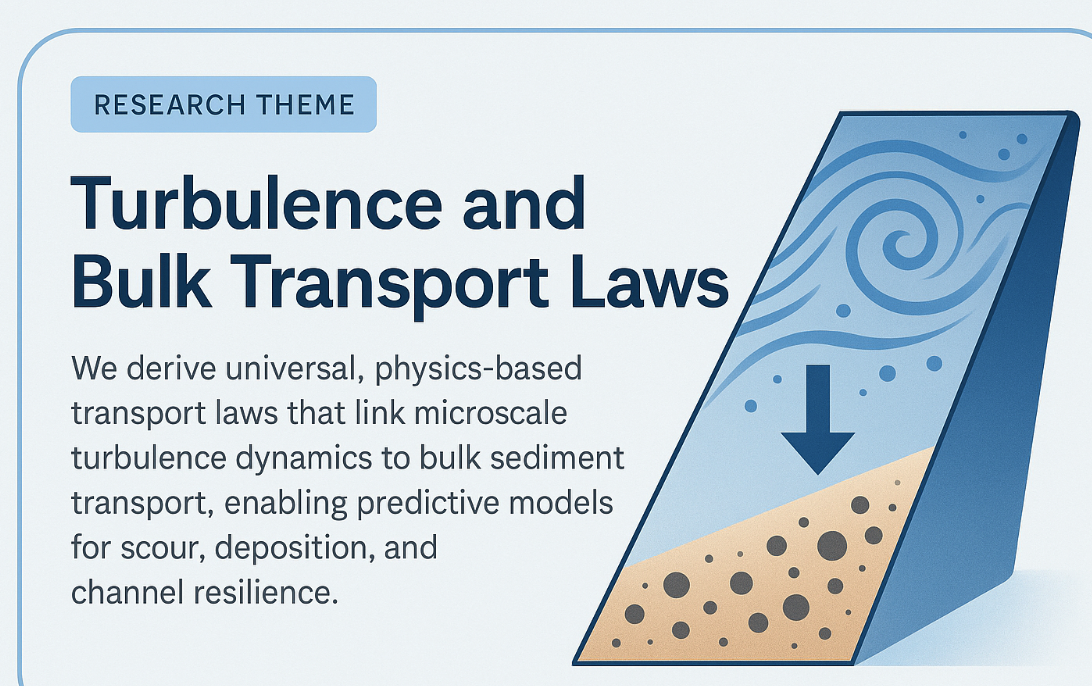
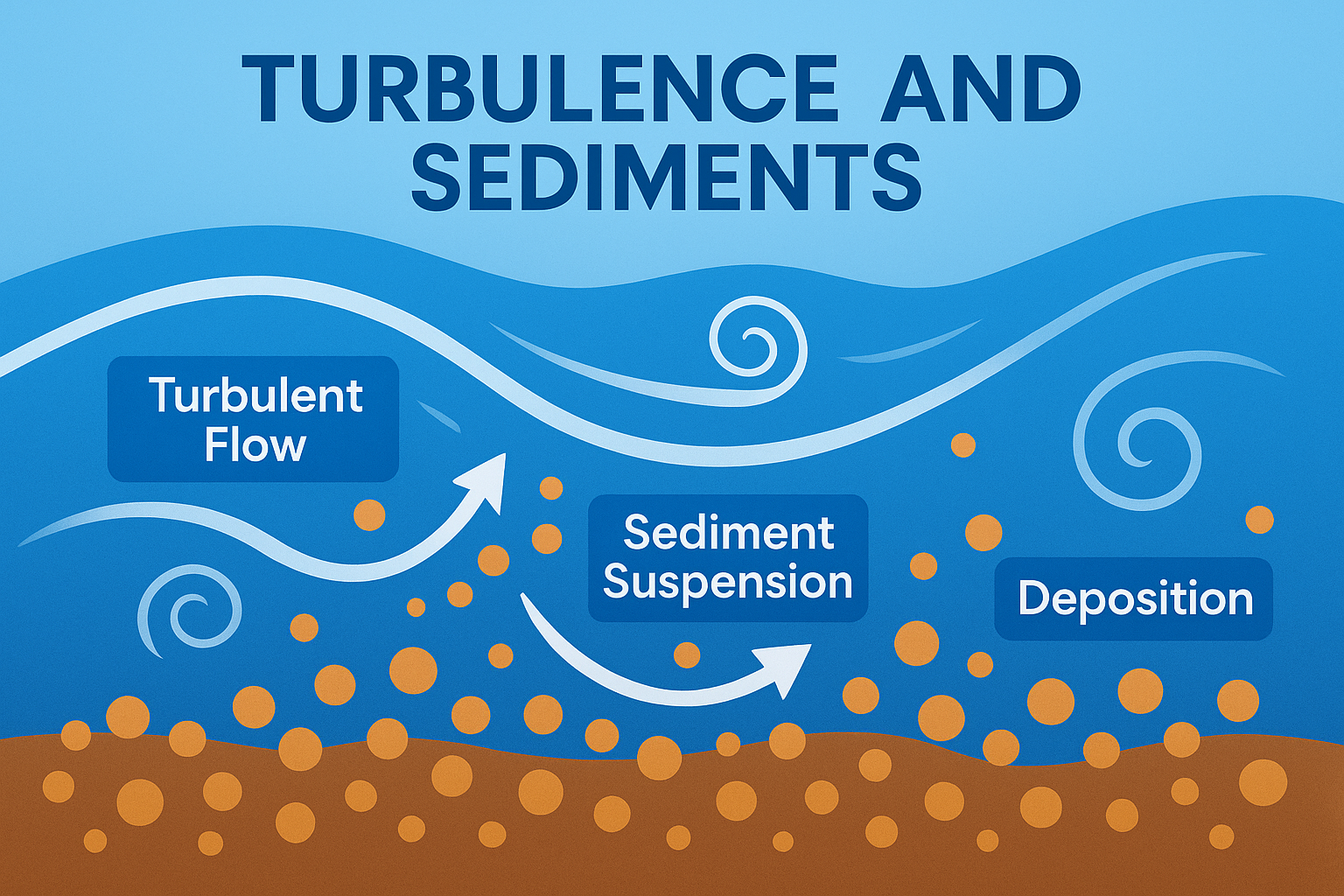
In our work, hydrodynamics is a bridge between turbulence physics and real-world transport: how momentum, energy, particles, and scalars move through rivers, wetlands, and coastal systems.
- deriving transport laws from turbulence budgets and spectra
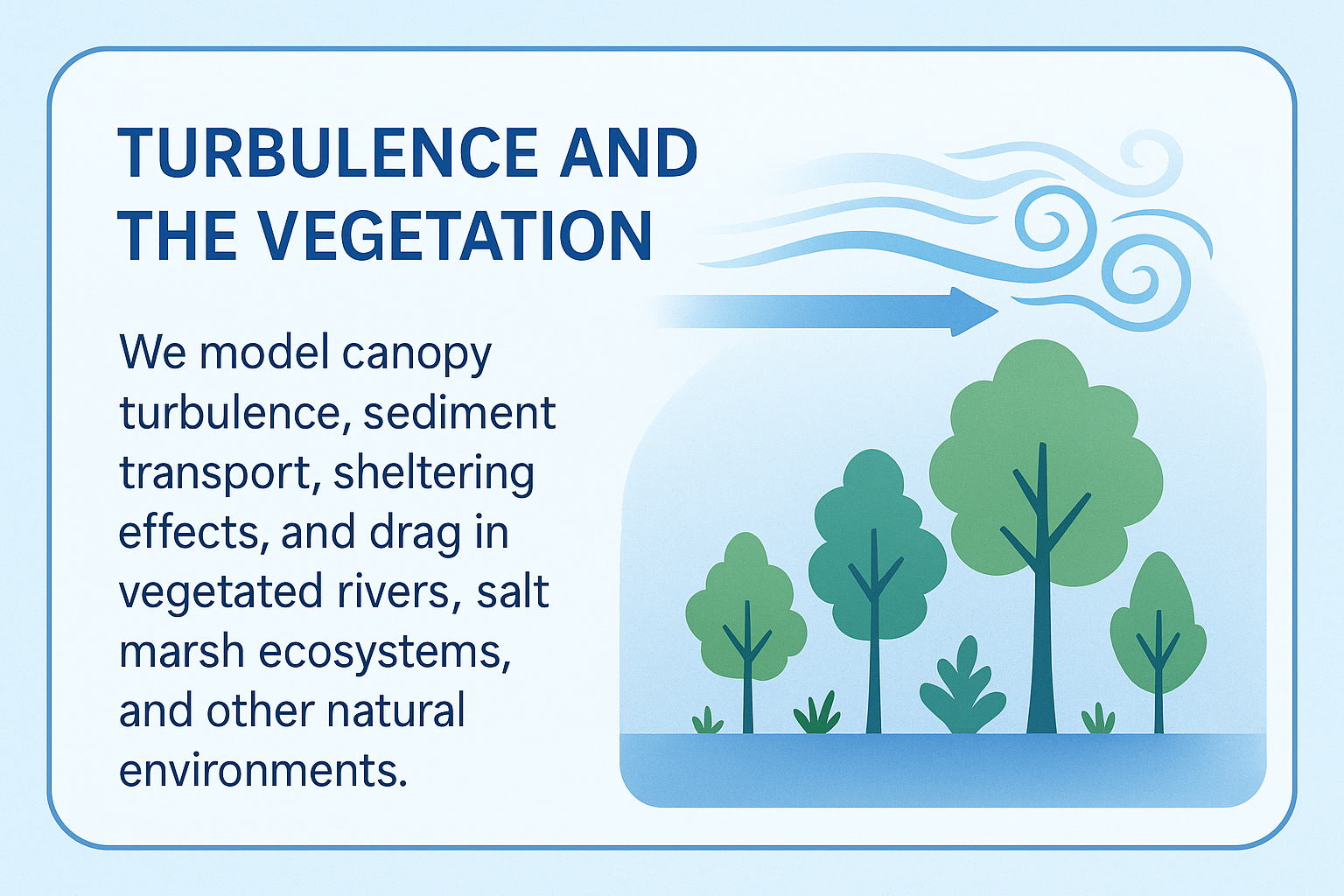
- quantifying how roughness and vegetation reshape flow structure
- predicting suspension, settling, scour, and deposition
- building models that are interpretable, scalable, and validated
Rather than relying on empirical correlations alone, we connect observations to mechanisms so models remain reliable under nonstationary forcing and climate-driven extremes.
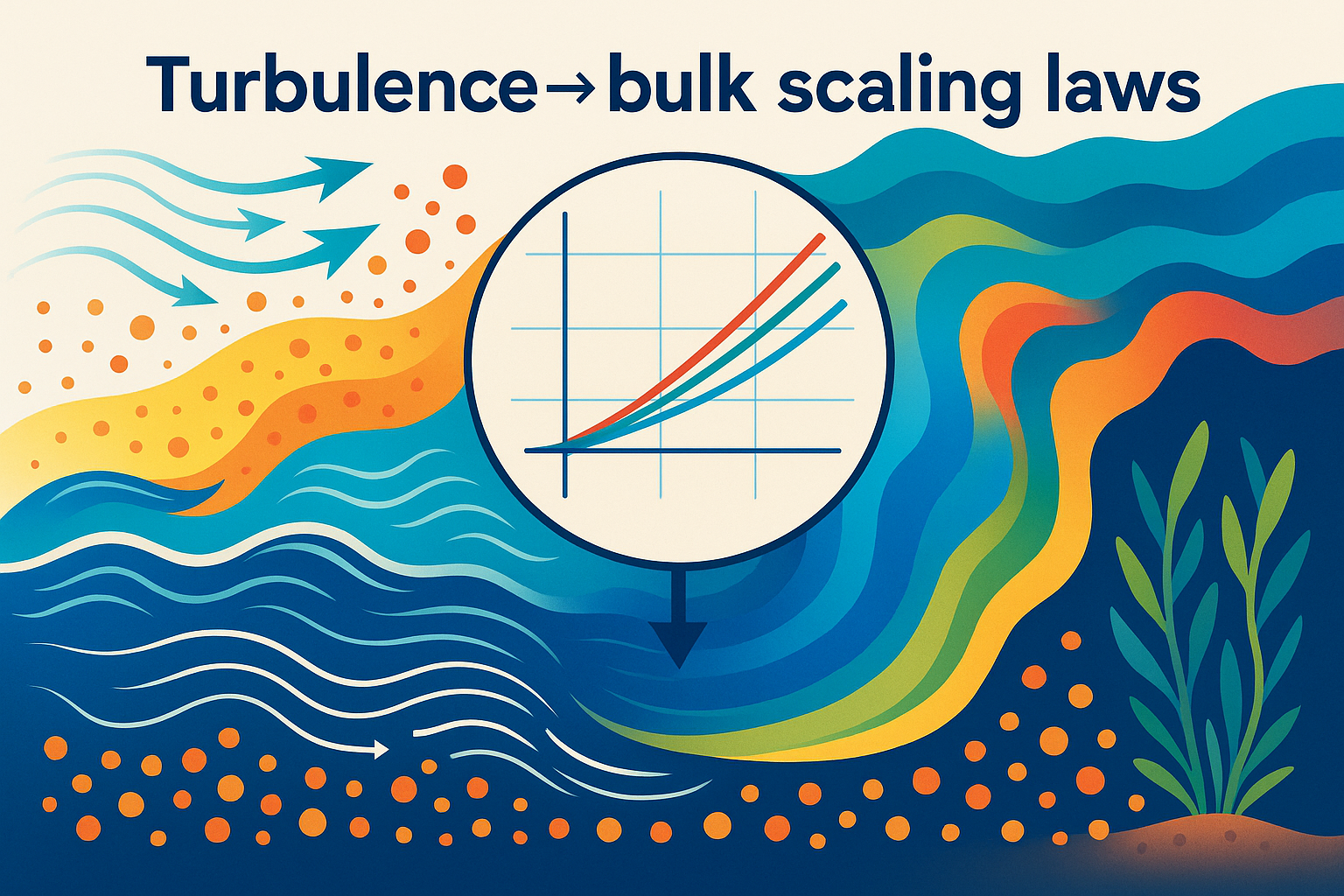
- What is the minimal turbulence physics needed to predict bulk sediment transport?
- When do classical models break, and what replaces them?
- How do roughness and vegetation reorganize effective diffusivities?
- Can we derive universal scaling laws stable under climate change?
- How do we build models that are both field-validated and deployment-ready?
First-principles links between turbulence energetics and sediment transport.
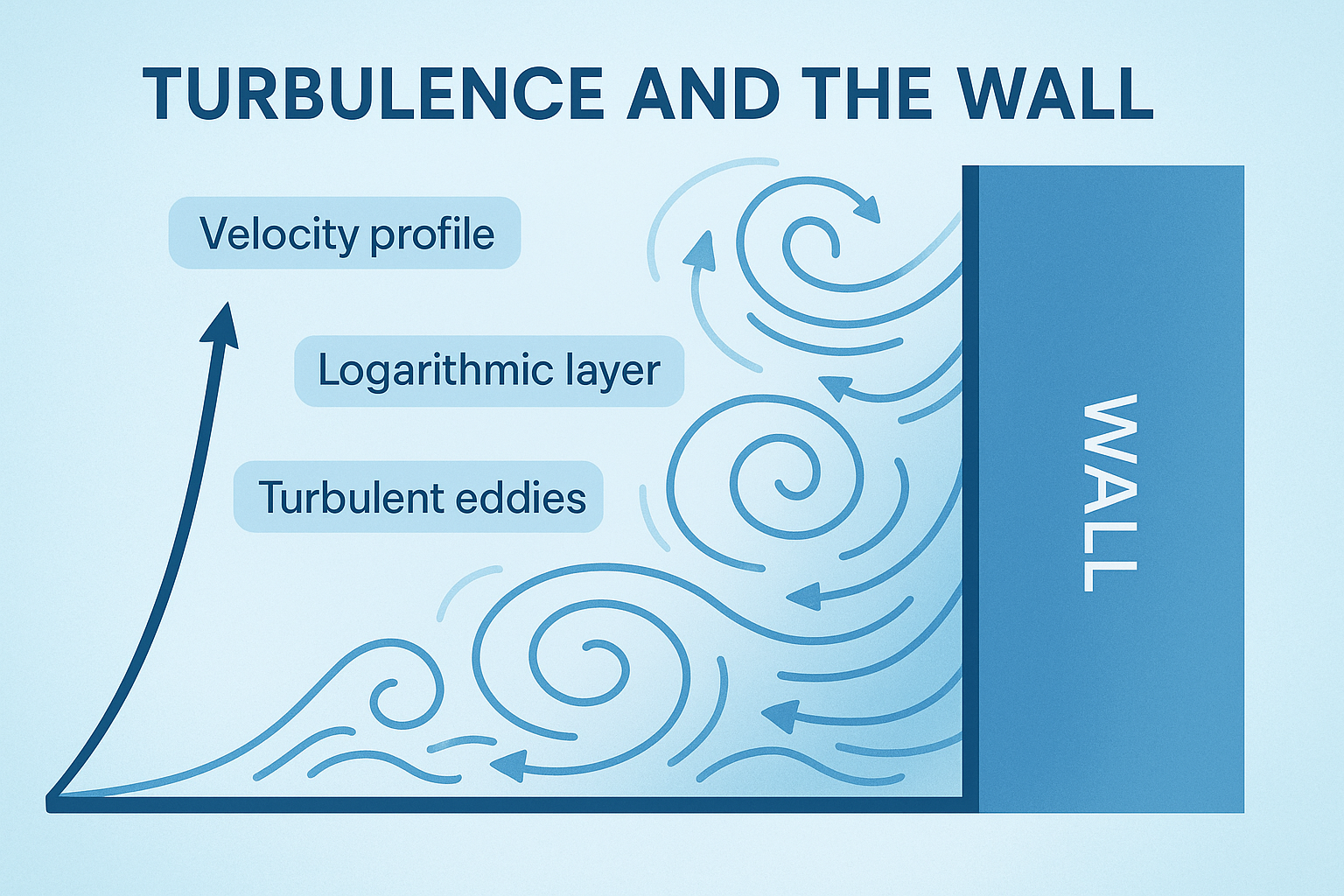
Mechanistic explanations of friction-factor transitions.
From canopy-scale turbulence to field-scale outcomes.
When classical settling theories succeed or fail.